Autonomous vehicles could substantially improve the quality and efficiency of public transport in Germany if deployed as part of a rail-centred system, according to a new study commissioned by DB Regio. The analysis models nationwide scenarios for 2045 and concludes that automation delivers the greatest benefit when it strengthens train and bus networks rather than operating as a stand-alone service.
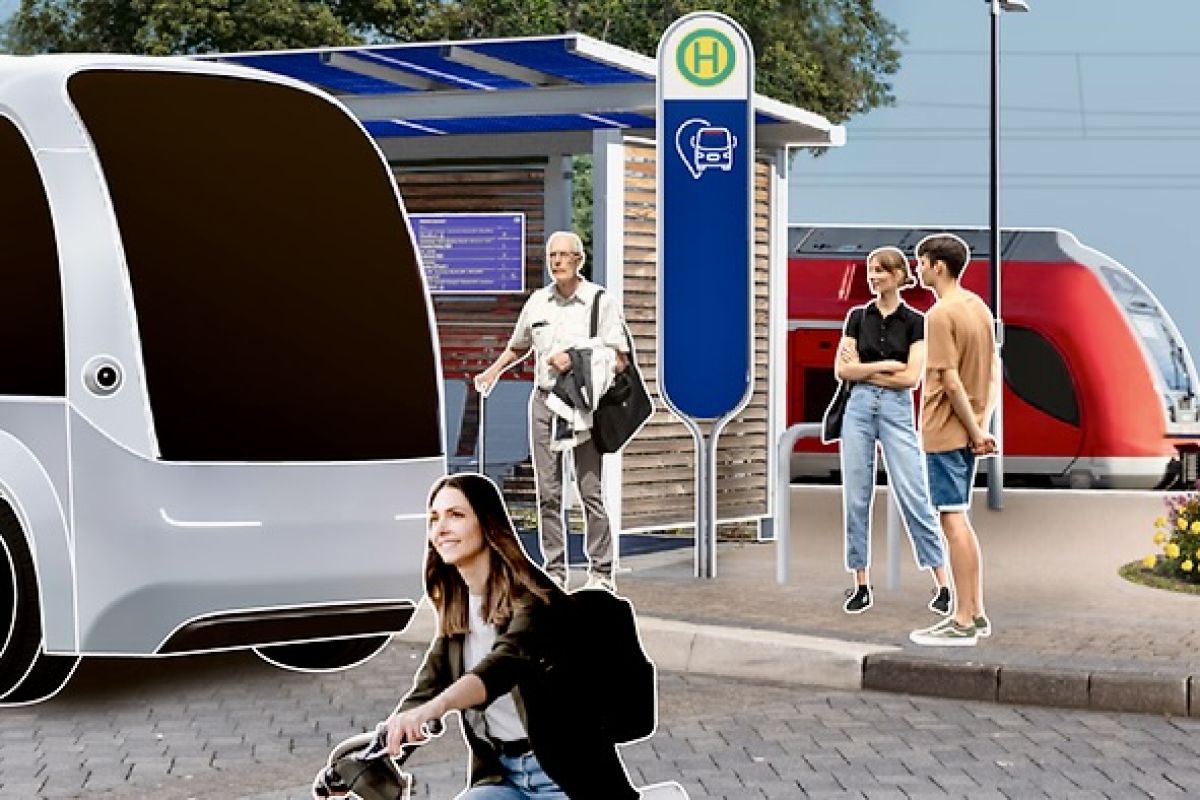
The study finds limited impact if autonomy is used only to automate existing bus services or to expand privately operated robotaxi fleets. In those cases, improvements in accessibility and travel times remain marginal, while urban road traffic could increase significantly. By contrast, the highest system-wide benefit is achieved when autonomous shuttles are integrated into public transport and used primarily as feeders to rail and upgraded bus corridors.
In this scenario, self-driving shuttles serve short-distance and low-density areas, connecting passengers either directly to destinations or to high-capacity rail services. Rail remains the backbone of the network, with optimised bus routes and autonomous feeders extending its reach into suburban and rural areas.
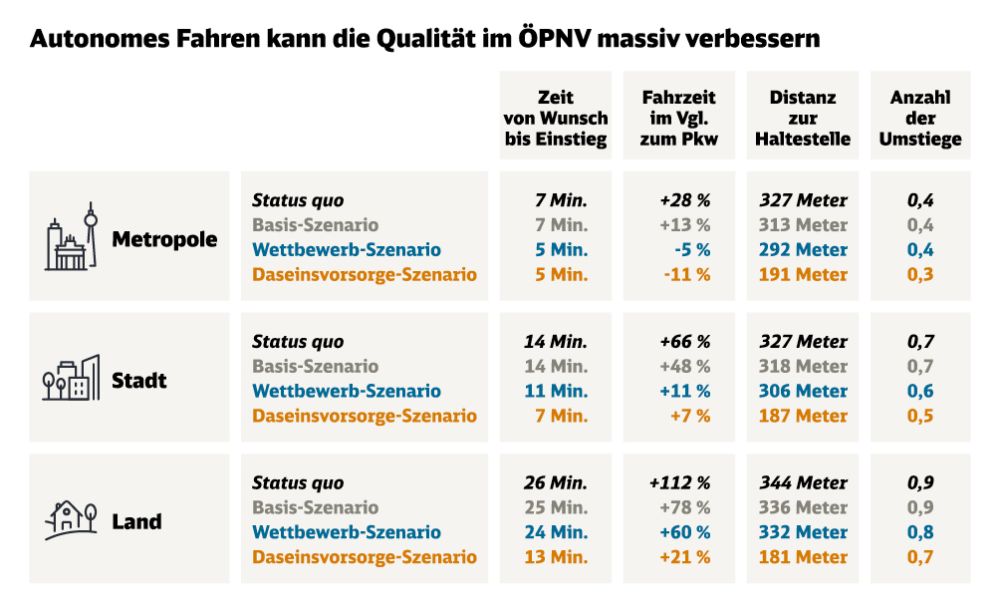
With around one million autonomous shuttles and buses in operation nationwide, average waiting times could fall to about five minutes in metropolitan areas and 13 minutes in rural regions. This would represent a reduction of up to 50% compared with current levels outside urban centres. Travel times would approach those of private cars and, in some metropolitan corridors, could be shorter.
The modelled shift in service quality would have a significant impact on modal split. The share of public transport in total transport performance would more than double to around 35%, driven mainly by higher rail ridership supported by improved first- and last-mile connections.
For the wider transport system, the study projects a reduction in road congestion of up to 11% in cities and metropolitan regions. At the same time, public subsidies for public transport could fall by around 20% despite a larger overall service volume, due to efficiency gains and higher fare revenues. Former car users switching to public transport could save an average of €170 per month.
The study was produced with contributions from ioki, the Karlsruhe Institute of Technology (KIT), the German Aerospace Center (DLR) and Prognos. It highlights that autonomous technology alone does not deliver structural change, but that its integration into a rail-based public transport model is key to achieving measurable effects on capacity, accessibility and traffic volumes.